
The Olympic season presents a unique challenge for the NIVELCO Ski Team. This season started from a more complex situation than usual since our two male competitors returned from serious injuries, which clearly affected the beginning of the season. Overall, preparation went smoothly, and it was evident in the first training camps that the team was heading in the right direction. The biggest challenge was that, due to the drop in the world rankings, our male competitors had to start with unfavorable bib numbers. In contrast, Noa Szőllős was able to start the season without any setbacks, so she showed progress from the start of the season.
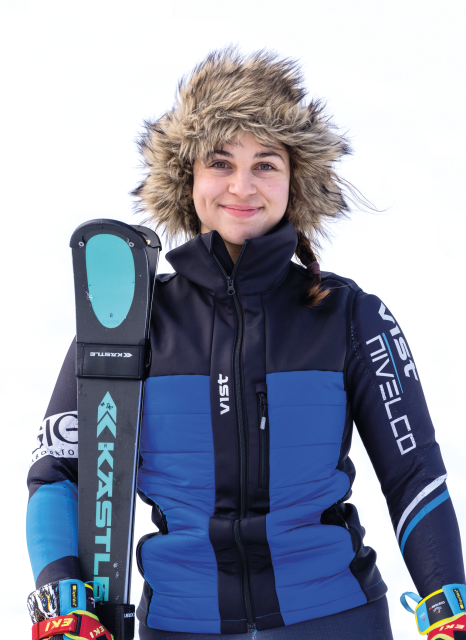
NOA – A season when everything came together
For Noa Szőllős, the 2025/26 season was all about development, learning, and valuable feedback. During the autumn training period in Norway and Finland, she trained with several top teams, which gave her a clear idea of where she stands compared to the international competition.
At the start of the World Cup season in Levi, she delivered an encouraging performance. After the first run, she was in 34th place, narrowly missing out on the second run. Although it felt like a disappointment at the time, it also boosted her confidence for the rest of the season.
Giant slalom proved more challenging in the early season, but she delivered increasingly stable slalom performances race by race. In Semmering, she came particularly close to scoring points, missing the second run by just 0.09 seconds, clearly showing her progress.
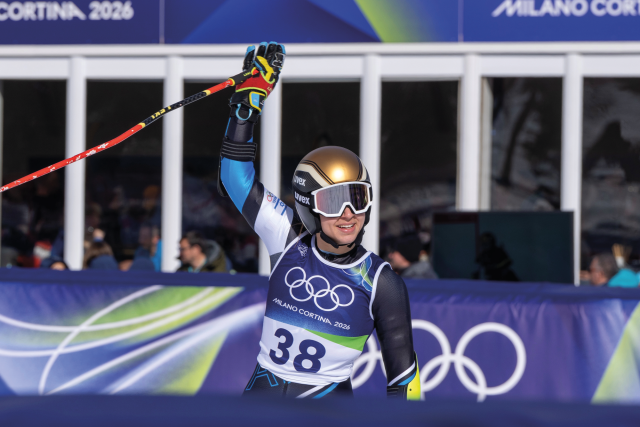
During the season, she made a conscious decision to focus more on slalom, and she quickly saw results. In Kranjska Gora, she earned her first World Cup points, a major milestone in her career.
Another special moment followed in Flachau: with 30th place in the first run, she earned bib number one for the second run. Although she didn’t finish the second run due to a mistake, her performance clearly demonstrated her progress.
In the second half of the season, she performed well in the Europa Cup, achieving two top-10 finishes and further strengthening her progress. The Olympics didn’t go as planned, but overall, her performance was stable, showing an upwards trajectory.
By the end of the season, she had delivered competitive performances in slalom. In giant slalom, the main goal for next season is to stabilize and better her performance, especially in competitions.
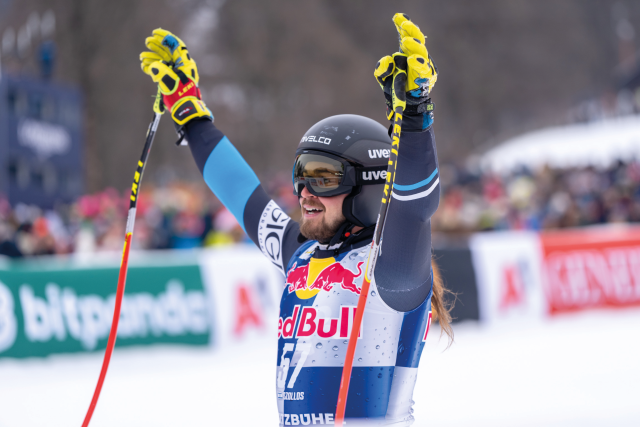
BARNI – Return in Kitzbühel
For Barnabás Szőllős, the 2025/26 season was all about returning and rebuilding. Following his injury, he struggled at the start of the season with higher starting positions and finding his race rhythm. The drop in his world ranking complicated his situation.
During preparation, he gradually returned to his usual level. It was evident in the first races that he could perform consistently even in unfavorable conditions. One of the season’s defining moments occurred in Kitzbühel.
The Streif is considered as the world’s most difficult and prestigious downhill course. He had suffered a severe crash there two years earlier. Returning to this course presented major physical and mental challenges. The true significance of his return, was not about performance, but about the mental challenge he had to overcome. Pushing out of the start gate and making it to the finish line safely is considered one of the most important milestones of the season.
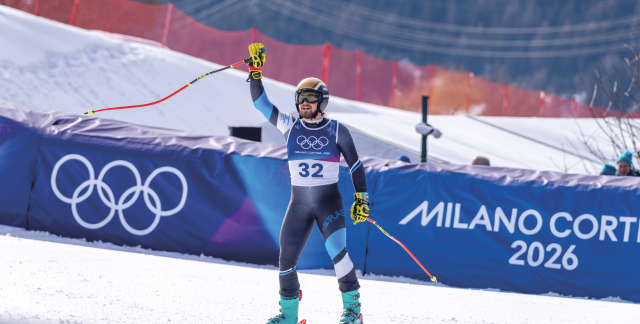
He competed in all disciplines during the season, and his performance was evident at the Olympic Games, where he placed 30th in downhill, 33rd in super-G, 26th in slalom, and 41st in giant slalom. These results are especially impressive given that he competed post-injury with unfavorable bibs and dealt with a recurring back hernia issue in the technical events.
During the season, he achieved top-10 results in thirteen races across various events. These demonstrate that, as the season progressed, he delivered increasingly stable performances.
This year was primarily about returning, regaining stability, and laying the foundation for the future.
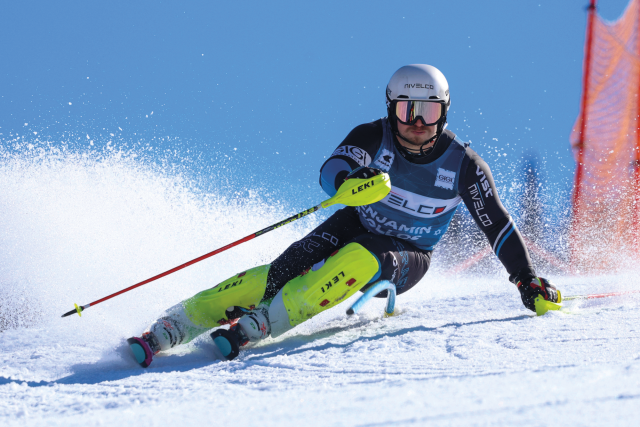
BENJI – Closing a Long Road
For Benjamin Szőllős, the 2025/26 season was about more than just competitions; it was also about closing a long chapter after his injury.
The period following his ACL injury was full of uncertainty, physical limitations, and questions. At the start of the season, his lack of speed was noticeable in the early race results. Although many technical elements returned, race tempo and confidence were rebuilt gradually. Fear slowly disappeared, movement became more natural, and speed returned. However, qualifying for the Olympics became more difficult, creating a challenging situation.
The Olympics ultimately provided a defining experience in a different role. Being present as a coach gave a fresh perspective and special motivation for the remainder of the season.
The real breakthrough came at the end of the season. From March onward, he achieved results that, in several cases, equaled or surpassed his pre-injury level. Skiing became liberating again, and his characteristic confidence returned.
With this year’s results, he has surpassed 20 international wins and 50 podium finishes in his career. He has not only returned, but also become a defining figure in the field again.
Thus, this season was not just a story of return; it was proof that with perseverance, patience, and proper support, even the hardest periods can be overcome.
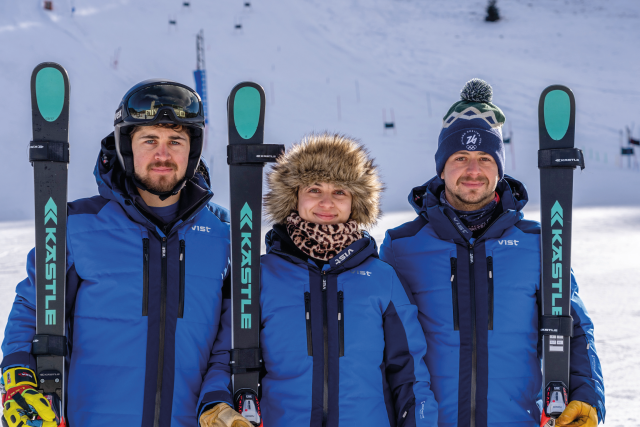
Olympic Performance and Historical Context
The Olympic competitions posed a significant logistical challenge for the team. The men’s and women’s venues were far apart, which presented extra organizational challenges for the smaller staff. The men’s events took place on Bormio’s infamous Stelvio course, while the women’s events were held on Cortina’s Olympic course.
The Milano-Cortina Winter Olympics presented challenges and important feedback for the NIVELCO Ski Team. All three competitors participated in the Games and performed consistently given the circumstances.
However, an important change was that the alpine combined was removed from the Olympic program. This was a particularly sensitive issue for the team because their greatest successes in recent years were tied to this event. Noa Szőllős won a silver medal in the alpine combined event at the Lausanne Youth Winter Olympics, and Barnabás Szőllős finished sixth in this event at the 2022 Beijing Olympics, which was also a point-scoring position. These results were of historic significance for the team and alpine skiing.
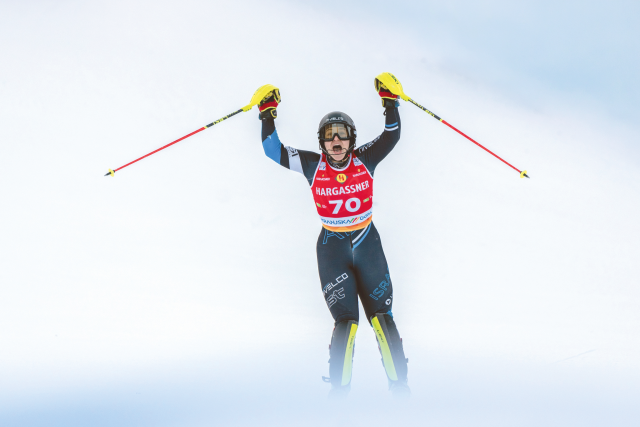
Barnabás Szőllős represented the team in every individual alpine event, finishing 30th in downhill, 33rd in super-G, 26th in slalom, and 41st in giant slalom.
Benjamin Szőllős participated in the Olympics as a coach, which contributed to his regaining his previous form as a competitor in the second half of the season. Noa Szőllős finished 35th in the Olympic giant slalom but did not finish the slalom event. While the results do not fully reflect the team’s development during the season, they do indicate progress towards the World Cup level.